

While the contribution margin shows the money left over for paying fixed expenses and profit, income is the https://maur.ro/2024/01/29/solved-non-manufacturing-costs-include-indirect/ total of a company’s revenue, other investments, and losses. Under both the contribution margin income statement and a normal income statement, the net profit or loss will be the same, because all revenue and expense items are included in both formats; only their order of presentation differs. The fixed production costs were $3,000, and fixed selling and administrative costs were $50,000. Variable production costs were $1,000 per unit, and variable selling and administrative costs were $500 per unit.

Interested in a product Demo?
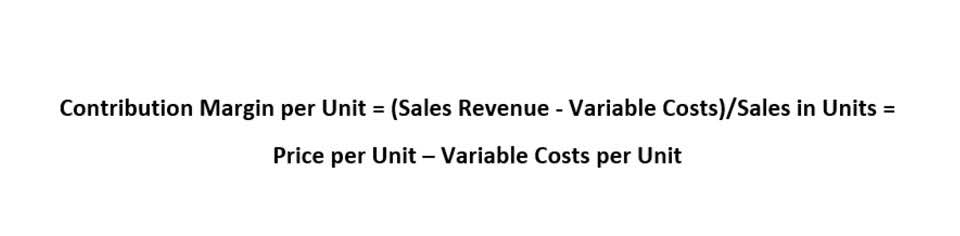
To get the contribution margin, you subtract these costs from the product’s revenue. The contribution margin and the variable cost can be expressed in the revenue percentage. These are called the contribution margin ratio and variable cost ratio, respectively. Traditional statements are required because they conform to GAAP accounting standards, and they are prepared for external audiences, including investors, lenders, and regulators. This operating income shows pre-tax profit, a positive signal to investors interested in investing in such a company. Converted into a percentage, this leaves the beauty company with a 44% contribution margin on its skincare product.
- Earnings Before Interest and Taxes (EBIT), on the other hand, measures overall company profitability and includes both variable and fixed expenses.
- Whether you’re pricing your new cupcake line or deciding which fitness gear to expand, this tool provides a clear path to sustainable profitability.
- This is a decision at scale and of substantial consequences where cost control is directly related to production, which is directly related to entries in income statements, although not stated in contribution statements.
- Traditional statements are required because they conform to GAAP accounting standards, and they are prepared for external audiences, including investors, lenders, and regulators.
- To understand what contribution income statements are, why they are super important to savvy managers, and how contribution and traditional income statements compare, read on.
- For that, you’ll need a tool that automates data collection, accurately calculates financial insights, and produces customizable reports.
Fixed Costs
- Contribution margin income statements refer to the statement which shows the amount of contribution arrived after deducting all the expenses that are variable from the total revenue amount.
- This standard format can give you a great financial snapshot of how your business is doing.
- Upon completion, earn a prestigious certificate to bolster your resume and career prospects.
- You might have been thinking that the contribution margin sounds like EBIT or EBITDA, but they’re actually pretty different.
- After covering fixed expenses (e.g., rent, salaries), the net profit is $25,000.
It’s important to note this is a very simplified look at a contribution margin income statement format. By subtracting these variable costs from revenue, you’ll arrive at the contribution margin. These costs don’t fluctuate with the level of production or sales an item makes. Examples include office rent, salaries unrelated to the production of goods, and fixed administrative costs. COGS only considers direct materials and labor that go into the finished product, whereas contribution margin also considers indirect costs. Before diving deeper, it’s important to clearly understand fixed and variable costs.
( . The difference of use:

You can’t directly calculate the contribution margin from the EBIT figure, without a breakdown of the fixed and variable costs for each product or service. In its simplest form, a contribution margin is the price of a specific product minus the variable costs of producing the item. Contribution margin income statements are useful barometers for businesses on whether clear skies are ahead or if they need to hunker down for a storm. While the contribution margin shows the money left over to cover fixed expenses and contribute to profit, income (or net profit) refers to the overall profitability of the business after all expenses, including taxes and interest. If you’re serious about truly understanding your business’s profitability, it’s time to get familiar with the contribution margin income statement.

Example of a contribution margin income statement
- Both methods lead to the same operating income, though they arrive via a different route.
- Putting these into a traditional income statement illustrates the bigger picture of which product lines are doing better than others or if any should be discontinued.
- As noted, the contribution margin income statement is a statement of a company’s costs or expenses, regardless of whether they are used to produce goods or provide services.
- The contribution format income statement reveals the profitability of a product by clearly separating variable costs from revenue.
- For instance, companies like Nike have hundreds of different shoe designs, each with different contribution margins.
A healthy contribution margin acts as a buffer against unforeseen expenses or sales dips. This gives a much more detailed financial picture of the business’s operating costs and how well the products perform. Depending on the type of business, either EBIT or EBITDA can be a better measure of the company’s profitability. Taxes and other company expenses can obscure how well a company’s products or services perform. This makes the EBITDA figure important for investors looking to put money into a business. An income statement would have a much more detailed breakdown of the variable and fixed expenses.
- A contribution margin is a narrow view of a product or service’s profitability, but the net profit is a much wider and more comprehensive look at a company’s financial performance.
- Going back to that beauty company example from earlier, we’ll assume the business has expanded into the high-end skincare market and wants to see how the new line is performing financially.
- Thus, the arrangement of expenses in the income statement corresponds to the nature of the expenses.
- The contribution margin excludes fixed overhead costs, whereas COGS usually includes some overhead as part of direct production costs.
- What’s left is the contribution margin, which gives a sense of how much is left over to cover fixed expenses and make a profit.
Meanwhile, traditional statements record all expenses related to production and management, i.e., based on whether an expense is related to production or management costs, regardless of variability. In its simplest form, a contribution margin is the price of a specific product minus the variable costs of producing it. What’s left is the contribution margin, which gives a sense of how much is left over to cover fixed expenses and make a profit. Contribution margin income statements are useful barometers for businesses to assess whether clear skies are ahead or if they need to prepare for a storm.
Instead, managing revenue and expenses is all about diving deeper into sorting out your expenses into fixed and variable ones. Here is where a contribution income statement (aka contribution margin income statement) comes in. The contribution statement controls a company’s expenses by separating costs based on variability, allowing managers to decide which products perform well. Contribution format statements separate expenses into fixed and variable costs.
What’s the difference between a contribution format and a traditional income statement?
One good example is Apple’s profit margin for the iPhone 13 which stood at 20%. After factoring in additional expenses like marketing, research and development, and administrative contribution format income statement costs, Apple earned an approximate profit of $161 per unit. To calculate the contribution margin, you need more detailed financial data to calculate EBIT.
This is where business owners and executive managers might need some guidance and understanding of which software or cloud-based solutions are the best fit. EBIT features in a company income statement as it gives the operating figures of a business more context. Getting this calculation right can be time-consuming and relies on consistent reporting for fixed and variable earnings. Looking at the variable expenses, each skincare product needs ingredients to be formulated, some nice packaging, and a good salesperson on commission. Let’s say that our beauty conglomerate sells 1,000 units of its bestselling skincare products for $50 each, totaling $50,000 in revenue.
ABC Budgeting for Nonprofits Cabinets can use the contribution format for segment analysis, evaluating its two business segments and their relative contribution margins. Managers would have to determine the allocation of variable and fixed costs to each segment. In many cases, direct labor is categorized as a fixed expense in the contribution margin income statement format, rather than a variable expense, because this cost does not always change in direct proportion to the amount of revenue generated. Instead, management needs to keep a certain minimum staffing in the production area, which does not vary for lower production volumes. A contribution margin income statement, on the other hand, is a purely management oriented format of presenting revenues and expenses that helps in various revenues and expense related decision making processes.